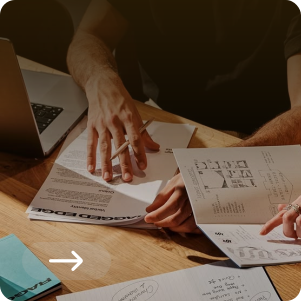
What Is an SOP and Why Does It Change Everything?A Standard Operating Procedure (SOP) is a documented, step-by-step description of how a specific task is performed in your business. It is the difference between a business that scales and one that collapses the moment the founder takes a two-week holiday.
SOPs answer the question: "If I hired someone tomorrow, could they do this task without asking me 20 questions?" When the answer is yes, you have a real business asset. When the answer is no, you have a bottleneck wearing your face.
The 5 Tasks You Should Document FirstDo not try to document everything at once. Start with the five tasks that:
1. You do most often (daily or weekly)2. Take the most time to explain to someone new3. Have the highest cost when done incorrectly4. You personally dread the most5. Others ask you about the most
Examples: client onboarding, invoice creation, proposal writing, social media scheduling, weekly reporting.
Hour 0–2: Record Yourself Doing the TaskOpen Loom, Tella, or simply your phone camera and record yourself doing the task while narrating what you are doing and why. Do not edit. Do not prepare. Just do it naturally.
This is your raw material. It takes 10 minutes and captures everything — including the nuances you would never think to write down.
Hour 2–8: Transcribe and StructureUse a transcription tool (Otter.ai, Whisper, or ChatGPT with audio) to convert your recording to text. Then organise it into a clear structure with: objective, trigger, step-by-step actions, tools used, and what "done" looks like.
Hour 8–24: Test With Someone ElseGive your draft SOP to a colleague, assistant, or even a friend unfamiliar with the task. Ask them to follow it without any explanation from you. Watch where they get stuck. Those are the gaps to fill.
The Hidden ROI of SOPsCompanies that systematically document their core processes report:
• 40–60% reduction in onboarding time for new team members• Significant decrease in errors on repetitive tasks• Higher business valuation (documented processes are a tangible asset)• Founder freedom — the ability to step away without the business stopping
Store your SOPs in a centralised, searchable location — Notion, Google Drive, or Confluence. Set a reminder to review each SOP every 6 months. Processes evolve. Your documentation should evolve with them.